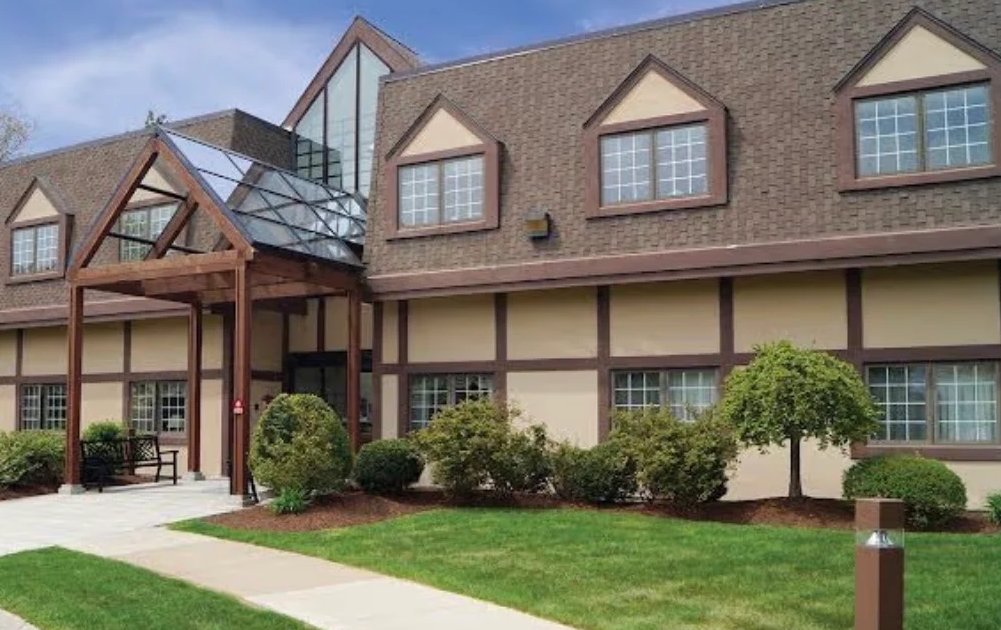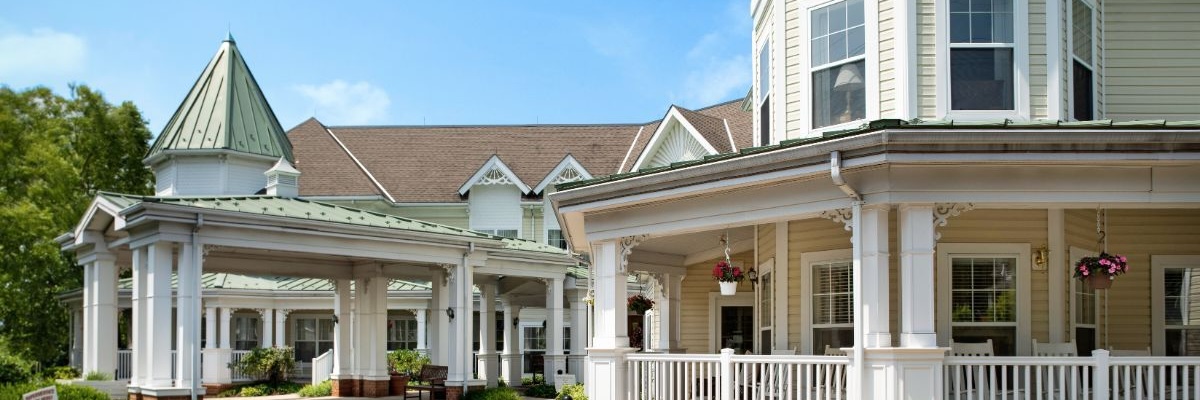
In upstate New York, a family-owned nursing home group runs eleven buildings. Four buildings sit well outside the nearest city, where the population is thin and the hospitals pay better. Every RN, LPN, and CNA hire across all eleven runs through one person.
Sarah Q.* came out of advertising technology and stepped into the role last September. Before she arrived, each building ran its own job ads. Buildings called the same candidates. The group paid twice for the same applicant and lost good people to its own internal competition. She centralized the whole recruiting operation in her first few months, made the ads generic, and routed each candidate to the building that fit their commute and the hours they wanted.
Sarah now owns the entire clinical funnel for eleven buildings: sourcing, screening, booking every interview, and chasing every follow-up. 20-30 nursing roles are open at any given time. Half of her job description is retention. She had already built a career development program for the group and could not get to it because of the high recruiting needs.
“There are 11 facilities and there’s one of me,” she told Carefam’s CEO on their first call in June 2026.
The economics were stuck. The group spent $8,500 a month on job board ads across the eleven buildings, and the return varied for reasons nobody could explain. “You pay, and you’re paying for visibility,” Sarah told Carefam on that same June call. “Sometimes we get lots of applicants, sometimes we don’t, and I can’t always make sense of why.” Their job board rep’s advice was to spend more. The chairman had already cut that budget down from $10,000 and was not going higher.
The group is also agency-free, which very few operators their size can say. It is the harder way to run eleven buildings, but it also means nothing absorbs a bad hiring month.
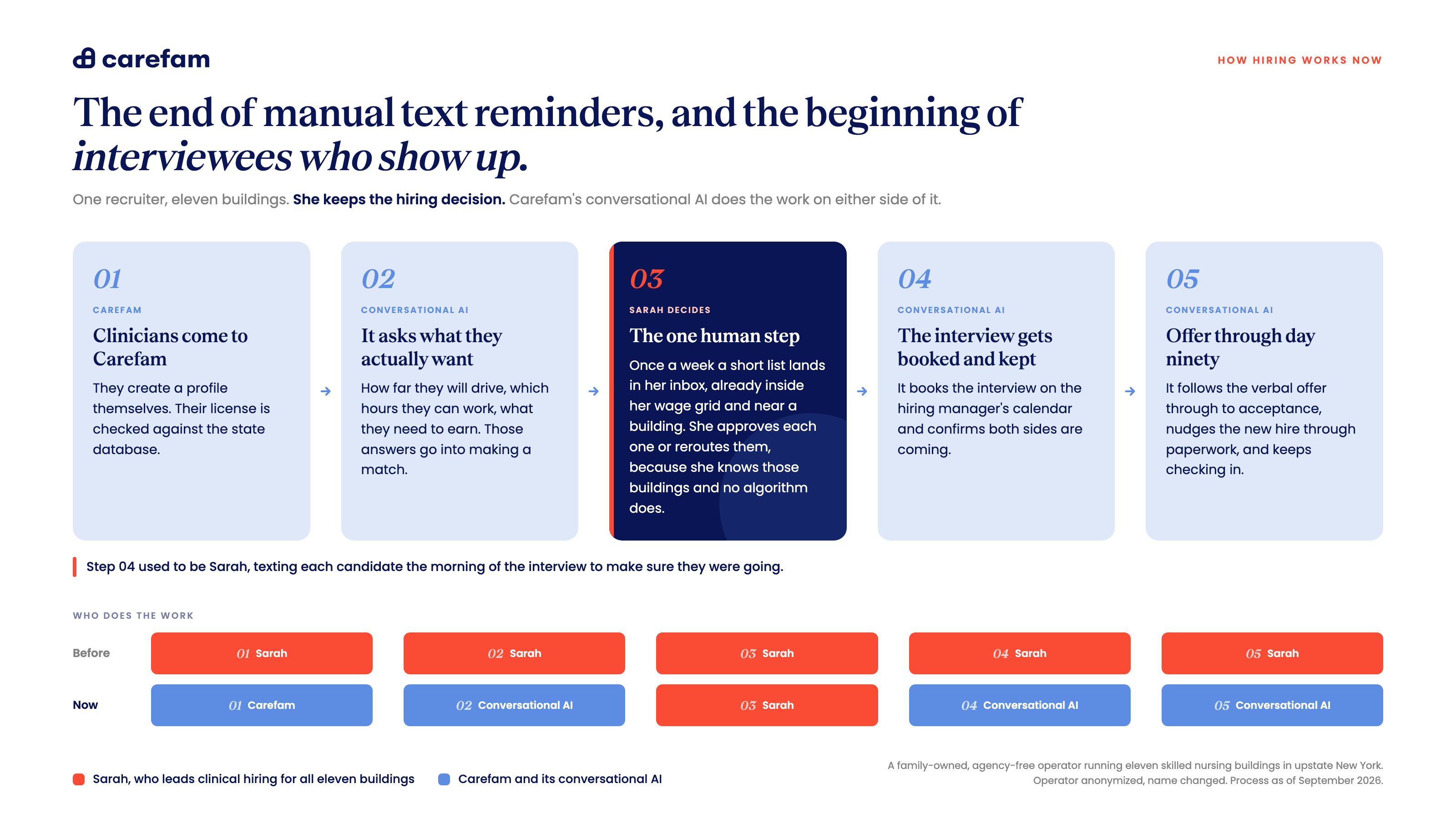
So the shortfall landed on Sarah’s calendar. The applicants who did come through were mostly the same names she had seen before. The ones who were new often did not show up to their interview. “It’s so sad that I have to text them the morning of the interview to make sure they’re going,” she said, describing her own workaround.
That is the cycle. Nurse turnover across the eleven buildings runs 53%, which is 1.3x the New York State average of 40%. Their average CMS staffing star rating is 2.5 against a state average of 2.8. Every point of turnover adds a new open role in her funnel. Every hour she spends filling it is an hour the retention program does not get, but the retention program is the thing that would bring turnover down.
The End Of Texting Candidates The Morning Of The Interview
Carefam went live across all eleven buildings on June 16.
Clinicians come to Carefam on their own. When one creates a profile, their license is checked against the state database, and Carefam’s conversational AI asks them what they actually want: how far they will drive, which hours they can work, what they need to earn, and more. Those answers go into making a match.
Once a week, a short list of credentialed, pre-screened clinicians who are already within commute distance of a specific building and already inside her wage grid lands in Sarah’s inbox. She approves each one or overrides the match and sends them to a different building, because she knows those buildings and no algorithm does. From there the conversational AI books the interview on the hiring manager’s calendar, confirms both sides are coming, follows the verbal offer through to acceptance, nudges the new hire through paperwork, and keeps checking in through orientation and the first ninety days.
Results: Candidates actually show up to orientation
20 pre-screened clinicians a week, across all eleven buildings. 196 in total, and she approved 126 for an interview. She had been vetting every applicant against her own email history to catch past no-shows, and she cleared 64% of this list.
30 days from go-live to the first clinician starting. An LPN started on July 16, at one of the buildings she had been advertising for since the springtime.
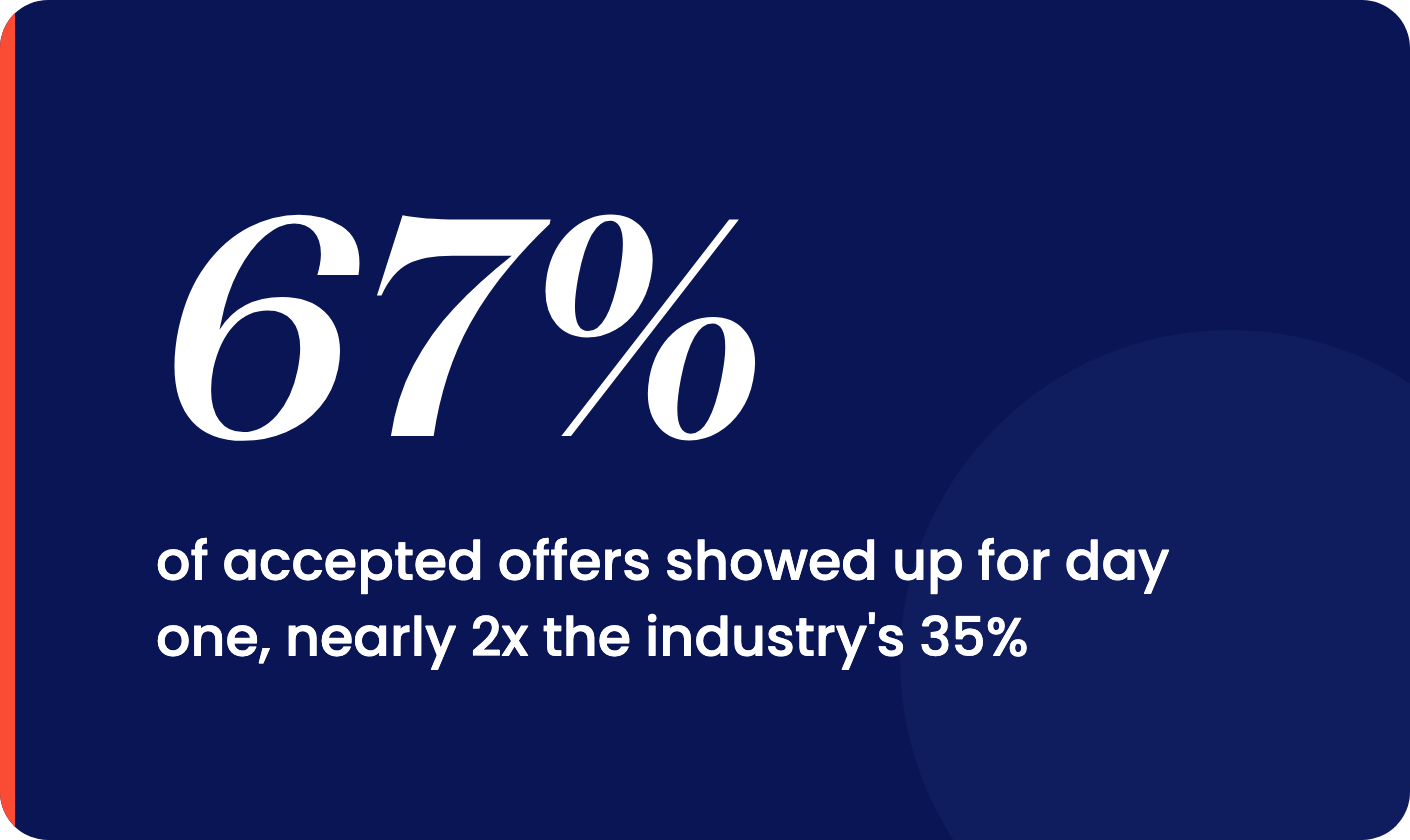
67% of candidates who accepted a verbal offer showed up for day 1, which is nearly 2x the industry’s average of 35%.
Two weeks in, on her first check-in with Carefam’s customer success team, Sarah put the value in her own terms. “As someone in my position, it’s taking hours of time off my plate.” Then she said the part that matters more: “I’ve already moved so much deeper into retention. I couldn’t get there until last week, because I was doing, you know, just everything you’re doing.”
What happens next
On August 7, ten days before the trial was set to expire, the chairman signed a one-year agreement covering unlimited clinical hiring across eight of the eleven buildings. Sarah’s goal is to come off job boards for nursing entirely.
Three DON seats are still open, and the hardest role in the group to fill is still evening CNA. The number that decides whether this year looks different is the staffing star rating those eleven buildings carry into their next survey. It only moves when the people they hire directly stay. Five of the first six have.
*Name has been changed for anonymity.